Modes of the Major Scale
Ecclesiastical modes, also named church modes, Greek modes or Gregorian modes formed in the Middle Ages a set of seven scales whose use has weakened because of the appearance of the major / minor tonal system. Many centuries later these modes have reappeared.
The Seven Modes Of The Major Scale :
Unlock the full potential of your guitar playing by mastering the modes of the major scale. Whether you're aiming to improvise with confidence, add color to your solos, or better understand the fretboard, the following pages break down each mode in a clear and practical way.
From the bright and uplifting Ionian to the darker, more expressive Locrian, you'll discover how each mode shapes your sound and expands your musical vocabulary.
Click the links below to explore diagrams, examples, and tips designed specifically for guitarists.
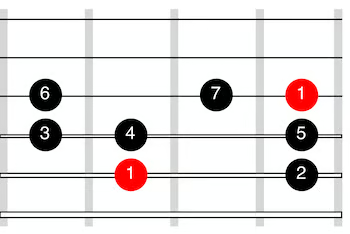
➜ Ionian Mode (The Major Scale)
This is the first mode of the major scale.
It sounds bright, happy
Formula : 1 2 3 4 5 6 7
Related Chord : Maj7
➜ Dorian Mode
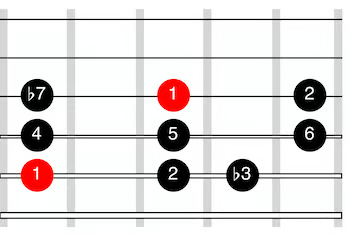
This is the second mode of the major scale.
It sounds minor, jazzy
Formula : 1 2 ♭3 4 5 6 ♭7
Related Chord : m7
➜ Phrygian Mode
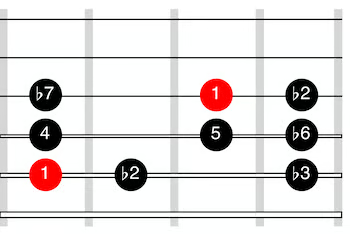
The third mode of the major scale.
It sounds dark, Spanish
Formula : 1 ♭2 ♭3 4 5 ♭6 ♭7
Related Chord : m7 (♭9 sound)
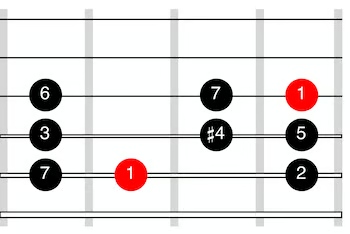
➜ Lydian Mode
This is the fourth mode of the major scale.
It sounds dreamy, bright
Formula : 1 2 3 ♯4 5 6 7
Related Chord : Maj7♯11
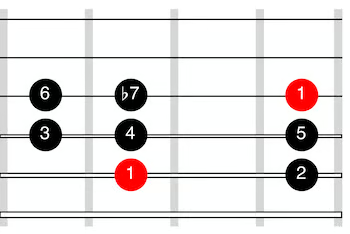
➜ Mixolydian Mode
This is the fifth mode of the major scale.
It sounds bluesy
Formula : 1 2 3 4 5 6 ♭7
Related Chord : 7
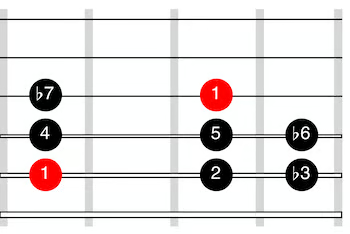
➜ Aeolian Mode (Natural Minor)
Sixth mode of the major scale.
It sounds natural minor, sad
Formula : 1 2 ♭3 4 5 ♭6 ♭7
Related Chord : m7
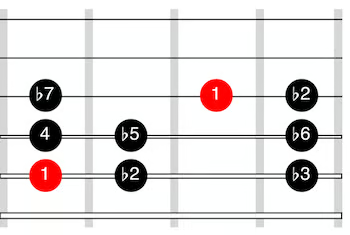
➜ Locrian Mode
The seventh mode of the major scale.
It sounds diminished, tense
Formula : 1 ♭2 ♭3 4 ♭5 ♭6 ♭7
Related Chord : m7♭5
Click on the links below to access the lessons and check this lesson to learn parallel and relative modes.

The Major Scale aka Ionian Mode

Dorian Mode For Guitar Explained : Shapes, Theory & Licks

The Phrygian Mode | Guitar Lesson With Diagrams, Theory and Licks

The Lydian Scale | Guitar Lesson with Diagrams

The Mixolydian Mode | Guitar Lesson with Shapes Charts and Licks

The Aeolian Mode aka Natural Minor Scale | Guitar Lesson With Diagrams and Theory

The Locrian mode | Guitar Lesson, Theory, Diagrams and Scale Charts

New PDF Method Available:
CAGED Arpeggios for Guitar – 600 Shapes in All 12 Keys