- Stef Ramin Guitar teacher, author & composer, music producer, webmaster.
About the author
Hi, I’m Stef Ramin — the creator and voice behind jazz-guitar-licks.com. I wear a few hats here: webmaster, publisher, eBook author, and professional guitar teacher.
Driven by a deep passion for jazz and blues, I built this space to share lessons, ideas, and inspiration with fellow guitar lovers around the world.
I hope you enjoy exploring and learning as much as I enjoy creating it.
Thanks for being here!
Posts by jazz-guitar-licks
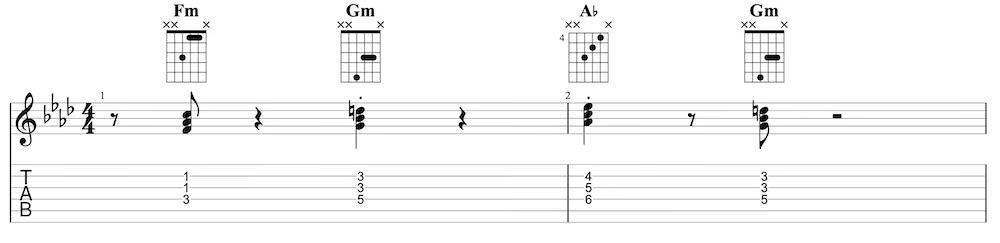
Midnight Blue by Kenny Burrell - Melody And Chords Transcribed For Guitar (Tabs & Diagrams)
 By
Stef Ramin
By
Stef Ramin
In this lesson, we will learn and analyze the melody of "Midnight Blue," one of Kenny Burrell's most celebrated compositions.
This tune is an excellent introduction to Burrell's melodic approach, combining the expressive language of the blues with the sophistication of jazz harmony.
Although the melody is technically accessible, its true challenge lies in capturing the relaxed feel, expressive phrasing, and subtle rhythmic nuances that define Burrell's playing.

Harmonic Minor vs. Melodic Minor: What's the Difference? (A Guitarist's Guide)
By
Stef Ramin
If you've been learning scales on guitar, you've probably encountered both the harmonic minor and melodic minor scales.
At first glance, they seem almost identical, they both start from the natural minor scale, but each changes a different note, creating a completely different sound and musical purpose.
Understanding the difference can dramatically improve your solos, songwriting, and improvisation.

New Release: CAGED Arpeggios for Guitar – 600 Shapes in All 12 Keys (Printable PDF)
By
Stef Ramin
If you've ever struggled to connect arpeggio shapes across the guitar neck or wanted to master the CAGED system, this new PDF method is designed for you.
I'm excited to announce the release of CAGED Arpeggios for Guitar – 600 Shapes in All 12 Keys, a comprehensive printable PDF that helps guitarists visualize chord tones, navigate the fretboard, and build stronger improvisation skills.
Whether you play jazz, blues, rock, fusion, country, or pop, this method provides a practical way to learn arpeggios in every area of the neck.
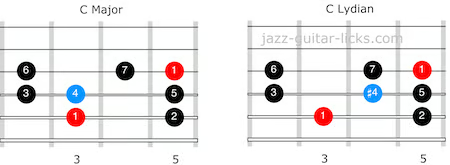
Major Scale vs. Lydian Scale: The One Note That Changes Everything
By
Stef Ramin
If you've spent any time learning guitar scales, you've probably encountered both the Major scale and the Lydian scale. At first glance, they seem almost identical—and in fact, they differ by only a single note. Yet that one note creates a dramatically different musical mood.
Understanding this relationship is one of the fastest ways to expand your improvisation skills and add new colors to your playing.
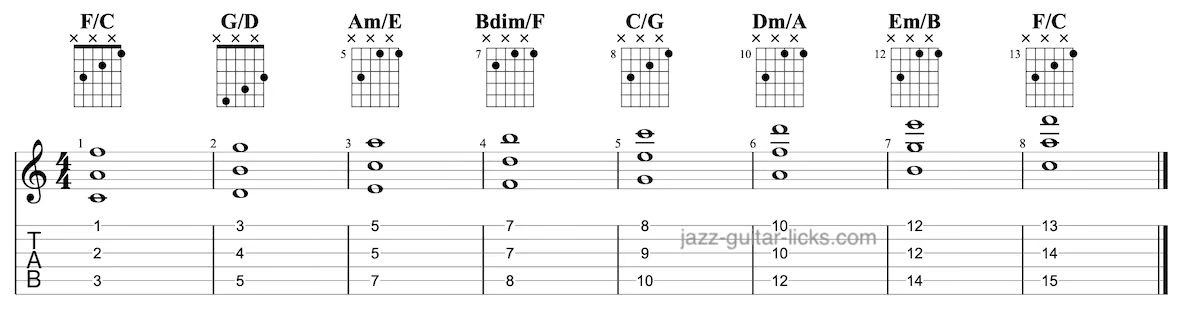
Triads Built in Sixths: A Reverse Perspective on Harmony
By
Stef Ramin
Most traditional harmony is taught through tertian harmony — the construction of chords by stacking thirds. Major, minor, diminished, and augmented triads all emerge from this principle.
This exercise proposes a different viewpoint: instead of building chords upward in thirds, we construct them through stacked diatonic sixths.
At first glance, the resulting structures seem unusual. Yet when the notes are reordered into close position, they reveal the same familiar triads found in conventional harmony.
The value of the exercise therefore lies not in inventing new chords, but in developing a different intervallic awareness of the same harmonic material.
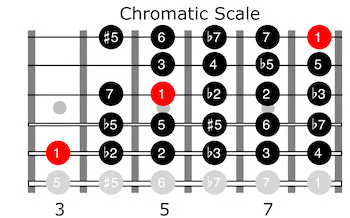
Symmetrical Scales for Guitar - Quick Beginner Guide
By
Stef Ramin
Music is built from patterns, and one of the most fascinating kinds of patterns is symmetry.
A symmetrical scale is a scale whose notes follow a repeating and balanced interval structure.
Unlike major and minor scales, symmetrical scales often sound mysterious, dreamy, tense, or futuristic because they do not strongly point to one “home” note.
In this lesson, we will explore what symmetrical scales are, how they work, and why musicians use them.
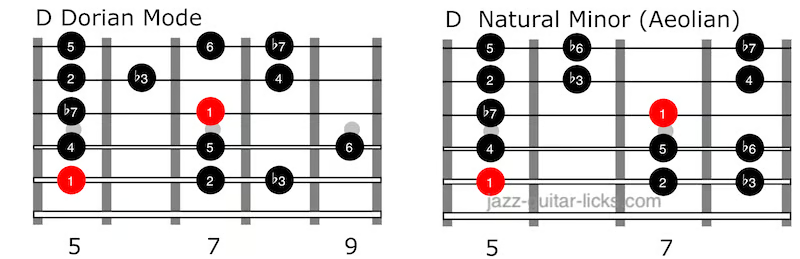
What Is the Dorian Mode? Quick Beginner Guitar Guide
By
Stef Ramin
The Dorian mode is one of the most widely used scales in jazz, blues, funk, and rock guitar.
Its minor sound combined with a major 6th gives it a smooth and melodic character that works perfectly over minor chords.
In this lesson, you’ll learn how the Dorian mode is built and how to use it in your solos.
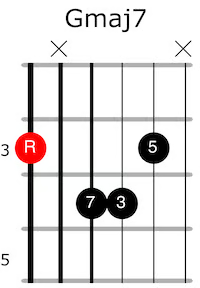
Master Major 7 Chords Across the Guitar Neck (Drop 2 & 3)
By
Stef Ramin
In this lesson, we explore Drop 2 and Drop 3 voicings for major 7 chords—two essential tools for creating richer, more professional-sounding harmony on the guitar.
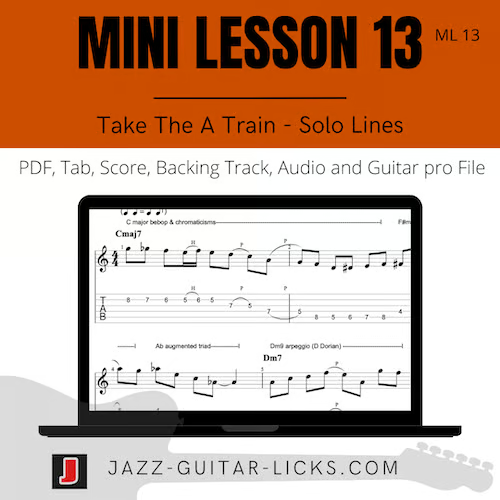
New Mini Lesson – Take the “A” Train Jazz Guitar Solo Study (ML 13)
By
Stef Ramin
A new mini lesson has been added to the Jazz Guitar Licks website: Take the “A” Train – Jazz Guitar Solo Study (ML 13).
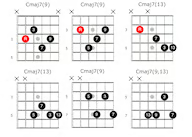
12 Extended Major 7 Chord Voicings For Guitar
By
Stef Ramin
Extended Major 7 chords add color, depth, and sophistication to your guitar playing. In this article, we’ll explore 12 extended Major 7 guitar chords that go beyond the basic shapes, introducing richer harmonies through added tones like the 9th and 13th.
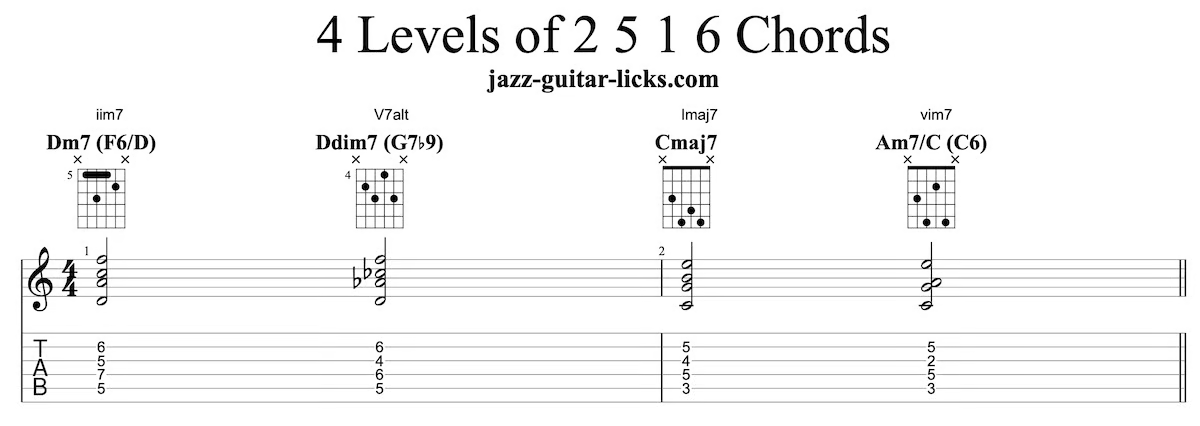
4 Levels of 2-5-1-6 Jazz Guitar Chords - PDF & Short Video
By
Stef Ramin
In this lesson, we’ll explore 4 Levels of 2–5–1–6 Jazz Guitar Chords.
Whether you're a developing player building your jazz foundation or an intermediate guitarist looking to expand your chord vocabulary, these four levels will give you a structured path to stronger, more musical comping.
This lesson comes with a PDF (Give What You Want).

Transforming the Diminished Chord - Barry Harris System For Guitar
By
Stef Ramin
Barry Harris explained that the fully diminished seventh chord sits at the center of the system.
By making simple chromatic adjustments to its notes, it naturally resolves into dominant, minor 6, or major 6 chords.

Major Scale Arpeggios and Chords For Guitar
By
Stef Ramin
Here is a structured guitar lesson focused on harmonized major scale arpeggios and chords in the key of C.
It is designed for intermediate students but can be adapted up or down depending on technique and theory background.

Mixolydian Dominant 7 Chord Tone Arpeggio Licks For Guitar
By
Stef Ramin
This lesson focuses on understanding and applying the four chord tones of a dominant 7 chord (1–3–5–♭7) as arpeggios embedded within the Mixolydian mode.
Chords Within Chords: Unlocking Hidden Harmony in Guitar
By
Stef Ramin
Guest Post by Dennis Winge
Most musicians learn chords as fixed units: a major triad is three notes, a seventh chord is four, an extended chord might be six or seven.
We tend to think of them as solid vertical structures, like blocks in a building. But here’s the secret: every extended chord is really a constellation of smaller chords.

Rhythm Changes - Jazz Guitar Chord Study
By
Stef Ramin